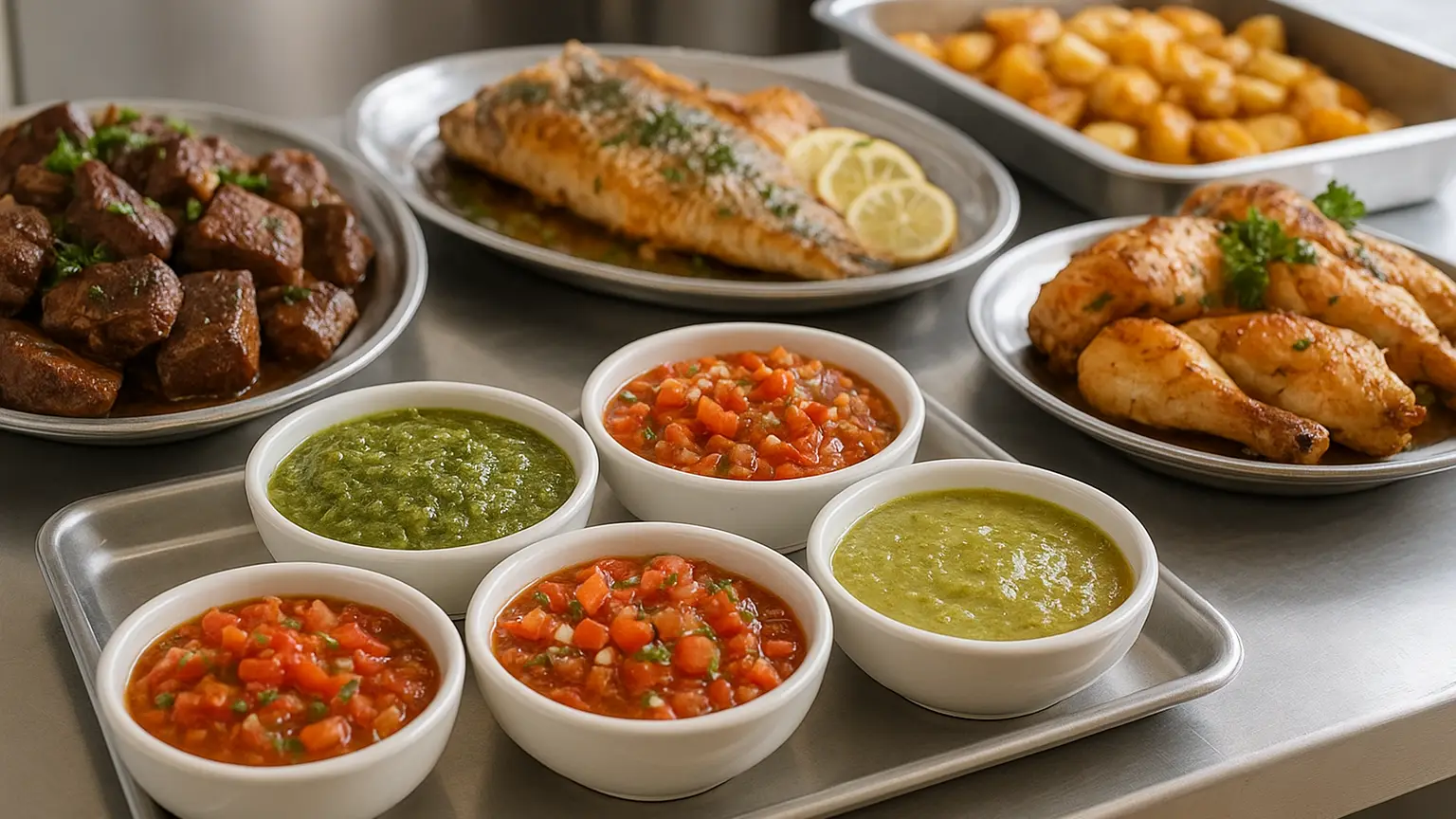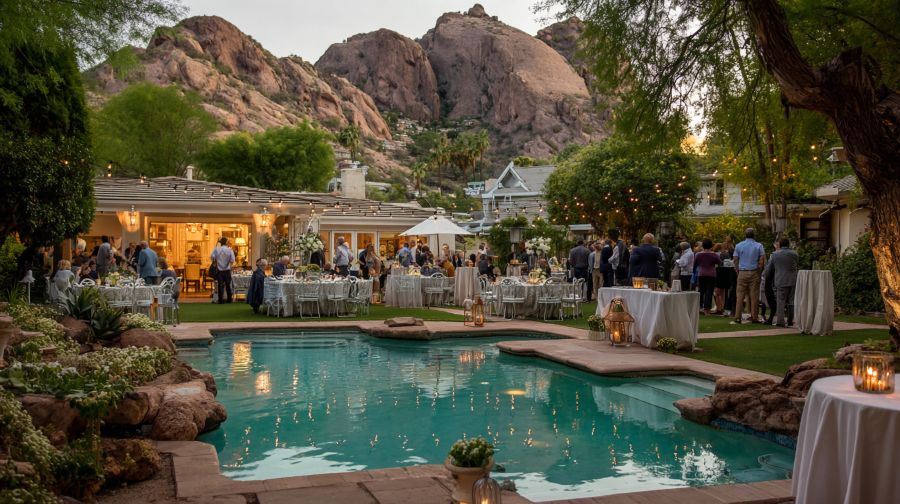
Before You Book Tacos, Read This First
Two words, one nod, and fifteen hidden decisions. Here is the math, the venue walk and the budget split that turn a casual taco idea into a reception that truly feeds everyone.
There is a moment in almost every wedding planning conversation where someone says it out loud. "Let's just do a taco bar." It gets a laugh, everyone nods, and the food portion of the wedding feels handled. Two words, problem solved, back to seating charts.
That moment is the trap. Not because tacos are wrong for a wedding. They can be spectacular. The trap is that "taco bar" is not a menu. It is a shortcut phrase that hides about fifteen real decisions, and couples usually do not find those decisions until a caterer starts asking questions six weeks out. This series was built with insights from the team at La Ristra, whose experience running high-volume Mexican service for weddings and large private events shaped how we break down the planning math here.
What "Taco Bar" Actually Means to Twelve Different People
Say "taco bar" to a room of 150 guests and you will get a dozen mental pictures. Your uncle imagines ground beef and hard shells. Your college roommate pictures al pastor shaved off a trompo. Your grandmother pictures the barbacoa she grew up with, slow cooked, two salsas, nothing else. Your vegan cousin pictures standing at the end of the line hoping there is more than rice. None of them are wrong, and that is the problem. The phrase sets an expectation without defining one, and the gap between what guests imagined and what shows up is where disappointment lives.
Here is the assumption that quietly wrecks more Mexican wedding receptions than anything else: that a taco bar is inherently cheaper, simpler and faster than a plated dinner. It can be all three when it is built correctly. It can also be the slowest, most labor-hungry, most expensive-per-guest option on the table when it is built on guesswork.
The Real Cost Structure Nobody Explains Upfront
A plated dinner has a fixed cost per plate. A build-your-own station has a variable one, because guests decide their own portions and most people overbuild their first taco. Three things drive that cost in ways couples do not expect:
- Protein overage. Guests self-serving take roughly 25 to 40 percent more protein than a plated portion. Budget plated quantities for a self-serve line and you run out by table eight.
- Component count. Every additional topping, salsa and garnish is a separate prep line, a separate hotel pan and a separate replenishment cycle. Twelve toppings is not twelve times the flavor. It is twelve times the labor.
- Staffing ratio. An unattended buffet looks cheap on paper and costs you in food waste and service speed. Attended stations cost more in labor and almost always cost less in total.
The couples who get burned are not the ones who spend too much. They are the ones who budgeted for a casual concept and got billed for a complex one, because the concept grew topping by topping without anyone recalculating.
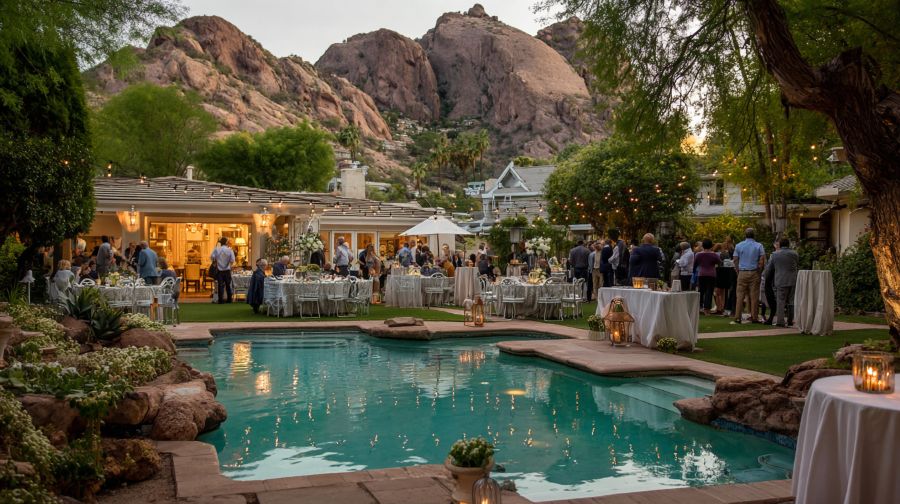
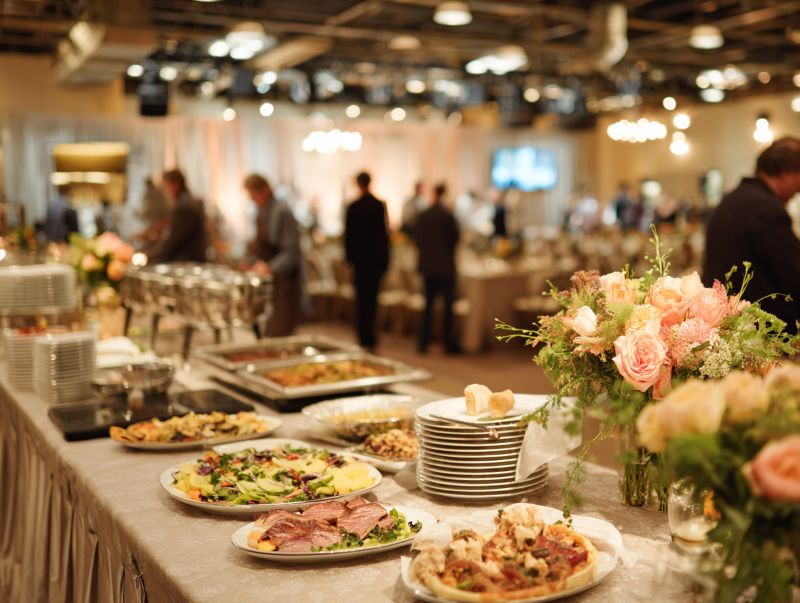
Your Venue Kitchen Decides More of Your Menu Than You Do
Before you fall in love with a dish, someone needs to walk the venue kitchen. Not look at photos. Walk it. The honest answer at a lot of beautiful wedding venues is that there is no working kitchen at all, just a warming room with two outlets and a prep table.
That single fact reshapes everything. Mexican food is heavily weighted toward slow-cooked, moisture-held proteins that need real hold temperature and real space. Barbacoa, carnitas, birria and cochinita pibil are not sauté-to-order items. They have to arrive hot and stay hot, and holding them well takes equipment, power and square footage.
Questions to Ask on the Venue Walkthrough
- How many amps and outlets are available in the service area?
- Is there a gas line, or is everything electric and propane-restricted?
- Where does the catering team stage, and how far is that from where guests eat?
- Is there refrigeration on site, or does everything travel in cold?
- Is there a hand-wash sink and a place to dump gray water?
- What time can the crew load in, and is there a hard load-out deadline?
A venue with no kitchen is not a dealbreaker. It just means your menu gets designed around transport and holding instead of à la minute cooking, and the food can be excellent either way. The mistake is picking the menu first and discovering the limits second.
Sizing the Guest Count Honestly
Count your guests in categories, not as one number. Kids eat less protein and far more rice, beans and cheese quesadillas. Older guests often eat lighter but appreciate softer textures and milder heat. The twenty-somethings who skipped lunch and started at the bar at four o'clock will eat like the meal is a competitive event. A 180-person wedding with 30 kids and a heavy bar program needs a completely different quantity plan than a 180-person wedding of mostly couples over fifty.
One more count that gets missed: your vendors. Photographer, DJ, planner, officiant and videographer often add up to eight to twelve extra meals. Settle the vendor-meal language in the contract early, not at 6 p.m. on the day.
Dietary Spread Is a Design Problem, Not an Add-On
The old approach was to build the main menu, then bolt on a sad vegetarian plate for the four people who requested one. That ages badly now that dietary needs at a typical wedding regularly include vegetarian, vegan, gluten-free, dairy-free and a handful of allergies.
Mexican cuisine is unusually well set up for this if you plan it in from the start. Corn tortillas are naturally gluten-free. Beans, rice, nopales, calabacitas, rajas made without the crema, roasted mushroom and poblano fillings, charred cauliflower with adobo. These are not compromise dishes. They are dishes people actively choose. The practical advice we kept hearing from La Ristra is to make at least one crowd-favorite item naturally plant-based, so dietary guests are eating from the main line rather than a separate corner table.
Cross-contact is the other half. Separate serving utensils, separate pans and a clear labeling system are worth requiring in the contract. Flour tortillas and corn tortillas should never share a warmer.
Where the Money Should Actually Go
Most couples split the catering budget wrong, spending the majority on the number of dishes and the minority on the quality of the few that matter. Three proteins done perfectly will outperform six done acceptably, and cost less in labor, equipment and waste. Guests do not audit your menu length. They remember whether the food tasted like someone cared.
A rough framework that holds up well for Mexican wedding service:
- Proteins: two to three, maximum. One rich and slow-cooked, one grilled or bright, one plant-forward.
- Tortillas: real ones, warmed properly, and budget more than you think. This is not the place to save forty dollars.
- Salsas: three, mild to genuinely hot, each distinct rather than three variations on one idea.
- Sides: two that do heavy lifting, like a proper rice and a bean that stands on its own.
- Labor and equipment: a real line item, usually 25 to 35 percent of the total.
That salsa line carries the most memory weight for the least money, which is why part two of this series is all about building a wedding menu around the salsa.
Costs That Show Up Late
Build these into the first budget draft instead of absorbing them as surprises:
- Rentals: chafers, hotel pans, tables, linens, plates, flatware, glassware
- Propane, generators or power drops at raw venues
- Travel and mileage for distant or rural sites
- Overtime if the reception runs past the contracted end
- Late-night snack service, almost always a separate line
- Service charge and gratuity, which are not the same thing
Tasting Early, Deciding Late
Book the tasting sooner than feels necessary. Not because you need to lock the menu a year out, but because the tasting is where you learn how a kitchen thinks: whether their salsas have real depth, whether the tortillas are handled with respect, whether they ask smart questions about your venue and your guest list.
Go in with your guest count categories, venue limitations and dietary list already in hand. A caterer who can redesign a menu on the spot around a venue with no gas line and 22 gluten-free guests is showing you exactly what they will do under pressure on the wedding day. Then hold off on finalizing. Menus should be locked after you know your real headcount, not before. Locking early means paying to change it later.
The Tortilla Was Never the Hard Part
The taco bar trap is not really about tacos. It is about treating a full catering operation as a casual idea, then asking that idea to feed two hundred people hot food in a field at eight at night. Everything that determines whether your Mexican wedding feast lands gets decided long before anyone tastes anything: how many people are truly coming, what the venue can physically support, who at your tables has a dietary need, and how the budget is divided between variety and quality. Get those four right and a tight, confident menu will outperform an ambitious one.
Once the structure is solid, the fun starts. The next part of this series gets into the build itself: the stations, the proteins, the sides and the one flavor element guests will still be talking about months later. After that, we get into timing, because when food leaves the kitchen is the difference between a feast and an apology, and the timing mistake that turns warm barbacoa cold is where that story ends.
Let the clock work for your menu, not against it
Fiesta Creative Catering has fed weddings, film sets and backyard parties across Arizona for two decades. Share your plans and we will map the food, the staff and the timing.